B2B Cold Email Response Rates: What Good Looks Like in 2026
Quick answer
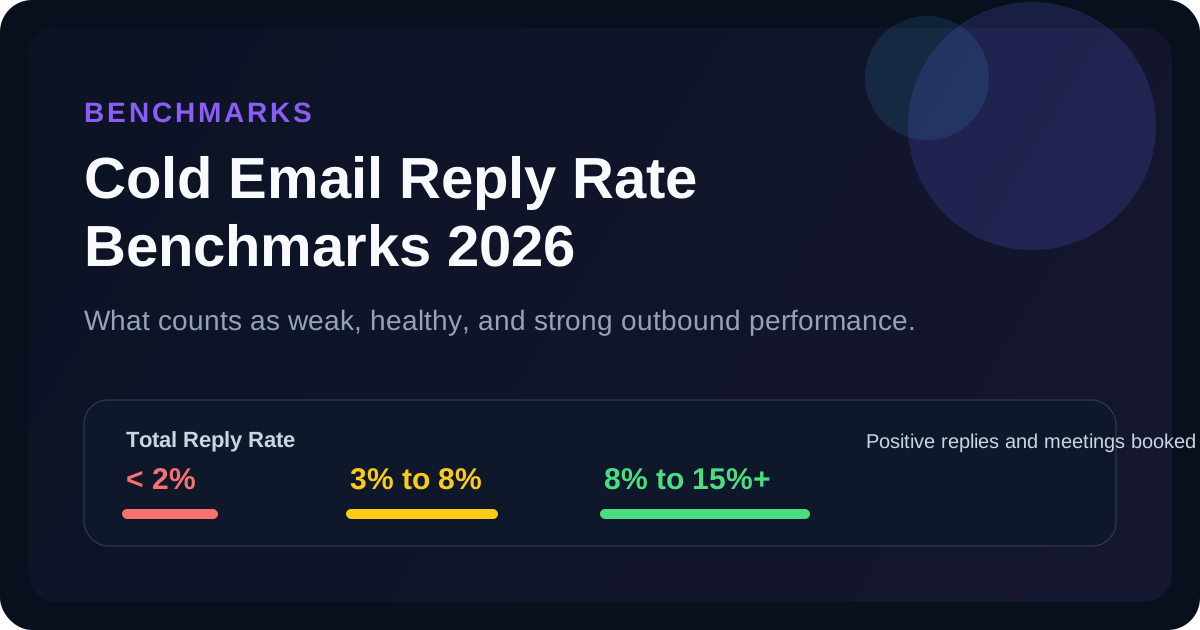
- For many B2B outbound campaigns, a 3% to 8% total response rate is a healthy range.
- Below 2% usually means targeting, messaging, or deliverability is weak.
- Highly personalized campaigns can exceed 8%, especially with tight lists and strong offers.
- Response rate matters more when you split it into total replies and positive replies.
If you are searching for B2B cold email response rates, you are probably trying to answer one of two questions: “Are our numbers normal?” or “Is something broken?” The answer depends on list quality, deliverability, and how relevant the message feels to the person opening it.
In 2026, the teams that win are not just sending more emails. They are building cleaner lists, using lower-friction calls to action, and measuring response quality instead of obsessing over open rate.
What counts as a good B2B cold email response rate?
| Metric | Weak | Healthy | Strong |
|---|---|---|---|
| Total response rate | < 2% | 3% to 8% | 8%+ |
| Positive response rate | < 1% | 1% to 3% | 3% to 6%+ |
| Meeting booking rate | < 0.5% | 0.5% to 2% | 2%+ |
Those numbers overlap with the reply-rate ranges already discussed in our cold email reply rate benchmarks, but this page is focused on B2B response specifically. In other words, this is what outbound teams should compare against when selling services, software, or high-ticket offers to businesses.
Why response rates vary so much in B2B
1. ICP quality changes everything
A campaign sent to founders actively hiring, recently funded, or visibly investing in growth will usually outperform a broad contact dump. Relevance narrows the gap between “opened” and “responded.”
2. Deliverability shapes the whole funnel
If messages are landing in spam or promotions, your response rate is artificially depressed before the copy ever gets a fair shot. Start with the deliverability checklist if the numbers look suspiciously low.
3. The CTA often creates the drop
Asking for a 30-minute call in the first email creates friction. In B2B, response rate tends to improve when the ask is light: a quick yes/no, permission to share more, or a simple reaction.
Practical rule: if people open but do not respond, the first thing to revisit is the message and CTA. If they do not open at all, start with deliverability and subject lines.
What usually causes a low B2B response rate?
- The list is too broad or stale.
- The opener sounds templated and generic.
- The offer is unclear or not urgent enough.
- The email asks for too much too early.
- The sending domain is weak or volume ramp was too aggressive.
How to improve response rate without sending more emails
- Tighten the prospect list before increasing send volume.
- Use a real business signal in the first line.
- Lower the CTA friction.
- Track positive responses separately from total replies.
- Use the ColdMailCalculator to see how better response rates change total opportunities.
Use response rate and funnel math together
A 4% total response rate can be excellent or weak depending on what happens after the reply. That is why it helps to look at reply quality and downstream conversion, not just the top-line percentage.
If your campaign has a decent response rate but almost no qualified conversations, the real issue may be positioning. If your response rate itself is weak, compare it against the benchmarks, then check daily send volume and domain health.
Check your real outbound gap
Plug in your send volume, open rate, and reply rate to see how many conversations you should be getting and where your funnel is leaking.
Use the CalculatorBuilding a cold email tool or agency dashboard?
Use the ColdMail API to forecast replies, meetings, clients, revenue, and ROI from campaign assumptions.
Explore the ColdMail APIFAQ
What is a good B2B cold email response rate?
For many campaigns, 3% to 8% is a healthy working range. Stronger performance usually comes from better targeting and more relevant messaging.
Is response rate the same as reply rate?
In practice they are often used the same way, but it helps to separate total responses from positive responses so you can measure quality.
Why is my B2B response rate low even with a good open rate?
That usually means the offer, first line, or CTA is weak. People are seeing the message but not finding a reason to answer.
Should I send more volume if my response rate is low?
Usually no. Fix list quality, messaging, or deliverability first. More volume on a weak setup often makes the problem worse.