Cold Email Deliverability Checklist 2026: Setup Before You Send
What matters most in 2026
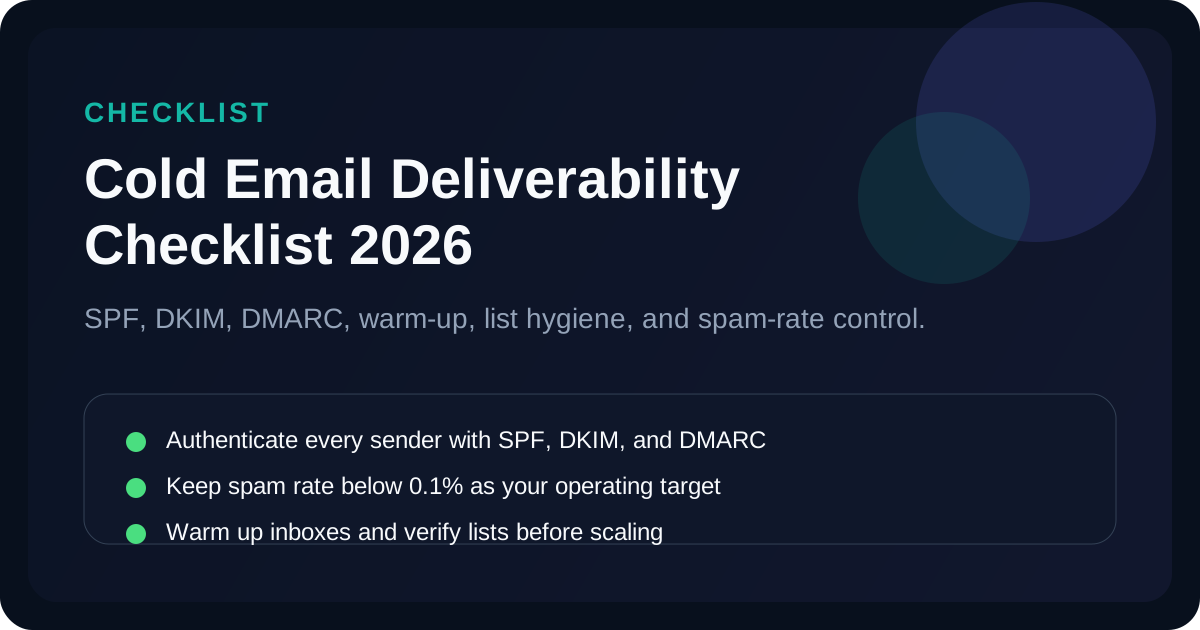
- SPF, DKIM, and DMARC are baseline requirements, not optional extras.
- Google’s current sender FAQ says bulk senders should keep spam rate below 0.1% and avoid ever reaching 0.3%.
- Inbox placement depends on behavior as much as DNS setup: volume, list quality, complaint rate, and recipient engagement all matter.
A lot of teams search for a cold email deliverability checklist after a campaign stops working. That is late. The better time to use one is before the first send, while you still have a clean domain and a chance to build healthy reputation.
In 2026, deliverability is not just about whether a message technically sends. It is about whether it lands in the inbox often enough to produce replies. Once setup is clean, use the reply-rate benchmarks to see whether performance is recovering.
Your pre-launch deliverability checklist
- Set up SPF correctly. Your sending service should be explicitly authorized.
- Enable DKIM signing. Outbound mail should be cryptographically signed.
- Publish a DMARC record. Even a minimum
p=nonerecord is better than missing DMARC. - Confirm domain alignment. Your From domain should align with authenticated domains.
- Use TLS. Secure transport is part of modern sender expectations.
- Warm up mailboxes gradually. Do not launch a new inbox at full volume.
- Verify your list. Remove risky, invalid, and stale addresses before first send.
- Keep copy plain and relevant. Over-designed, hype-heavy outreach attracts complaints.
- Add a clear opt-out path. Easy exits reduce spam complaints.
- Monitor spam rate and bounces weekly. Small issues become domain issues quickly.
What Gmail is currently enforcing
According to Google’s sender-guidelines FAQ, Gmail requires bulk senders to authenticate outbound mail, support unsubscribe standards for promotional messages, and keep reported spam low. Google says senders should keep spam rate below 0.1% and avoid reaching 0.3% or higher.
That is a very small margin. At 1,000 sends, your working target is fewer than 1 spam complaint. Three complaints is already in the danger zone.
Important distinction: you can be fully configured on SPF, DKIM, and DMARC and still have bad deliverability if volume, targeting, or engagement quality is poor.
Where most cold email setups fail
1. Treating authentication as the whole job
Authentication gets you in the game. It does not guarantee inbox placement. Reputation and user response determine whether you stay there.
2. Scaling too quickly
Many domains get damaged by aggressive early volume. Search results around safe sending limits in 2026 consistently recommend gradual increases, not day-one scale. For that part of the problem, see how many cold emails you should send per day.
3. Sending to the wrong people
Irrelevant outreach creates indifference, and indifference becomes spam complaints. Better targeting is one of the simplest deliverability fixes because it improves both engagement and reputation at the same time.
4. Using overly promotional language
Mailbox filtering is more contextual now, but generic sales language still hurts. Cold email that reads like mass marketing tends to draw more complaints and less engagement.
What to watch after launch
- Bounce rate: one of the first signs of list or infrastructure trouble.
- Reply rate: tells you whether recipients are actually seeing and valuing the emails.
- Positive reply rate: separates real interest from noise.
- Spam complaints: the number that can quietly kill the whole program.
Deliverability and revenue are connected
When deliverability drops, the visible symptom is often “low replies.” But low replies might actually mean the message is not reaching enough real inboxes. That is why send volume, inbox placement, and reply-rate math should be reviewed together, not as separate reports.
Use the ColdMailCalculator after changes to see whether better deliverability is actually improving the bottom of the funnel, not just vanity metrics. If opens improve but replies stay weak, move next to subject-line work and messaging diagnosis.
Check the funnel after you fix deliverability
Once your setup is clean, use the calculator to see how improved inbox placement changes replies and opportunities.
Use the CalculatorFAQ
Do I need DMARC for cold email in 2026?
Yes. At this point it should be treated as standard sender infrastructure.
What spam rate is too high for Gmail?
Google says senders should stay below 0.1% and avoid reaching 0.3% or higher.
Can good copy fix poor deliverability?
No. Better copy helps only after messages consistently reach the inbox.