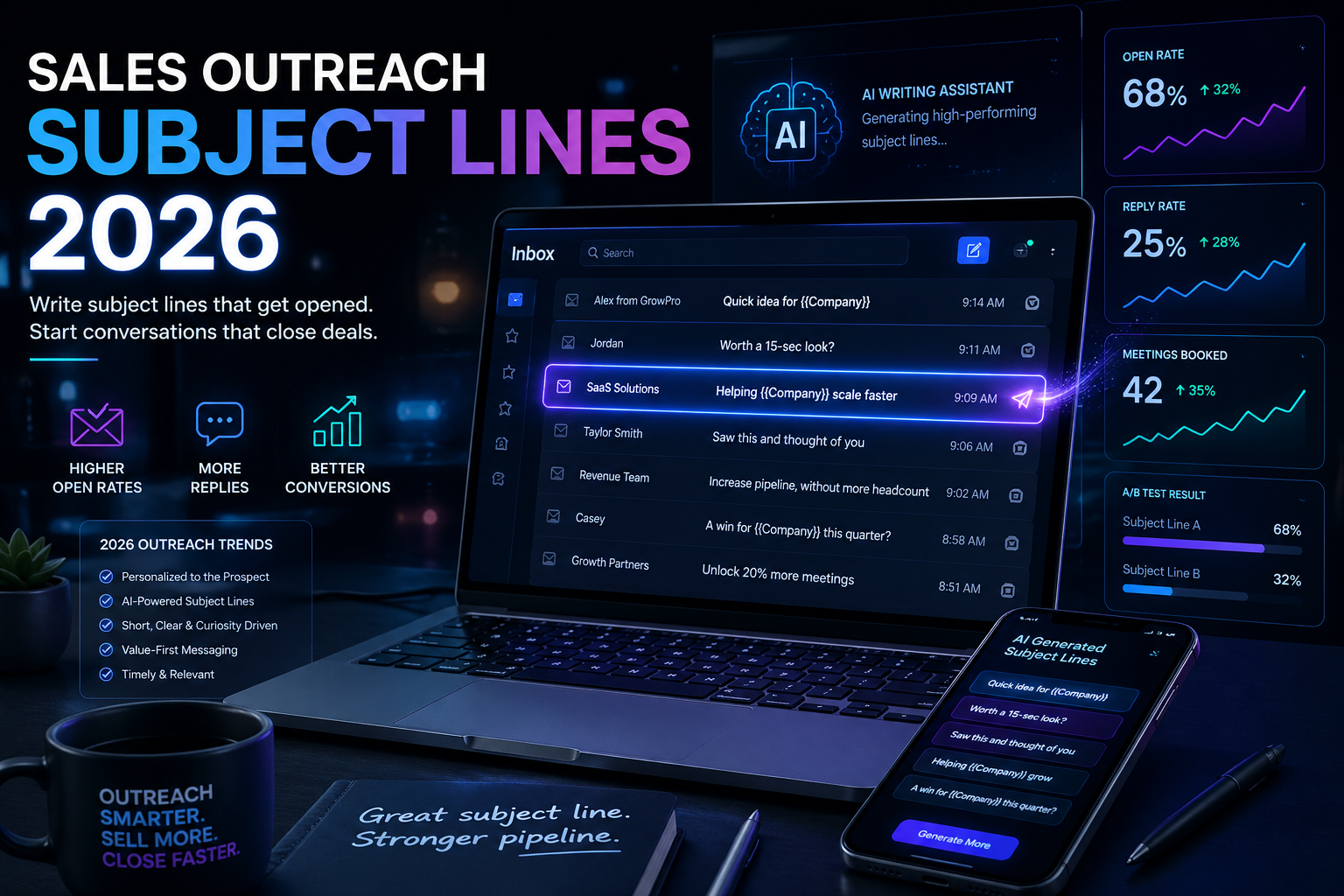
Quick Summary
- The Mobile Limit: Gmail truncates subject lines at 33 characters on mobile. Front-load your value.
- The New Metric: Stop tracking opens. Positive reply rate is the only metric that drives revenue.
- The Strategy: Use intent-based signals (funding, milestones, content) instead of generic merge tags.
- The Trend: Conversational, lowercase subject lines bypass spam filters and look human.
In 2026 the cold email landscape has finally shifted from click-bait tricks to genuine, intent-driven messaging. Open-rates are no longer the king – what matters now is the positive reply rate, the single metric that actually moves revenue.
This guide shows you exactly how to write subject lines that cut through the noise, obey mobile-first constraints, and turn prospects into conversations.
The Mobile Limit: 33-character rule Gmail
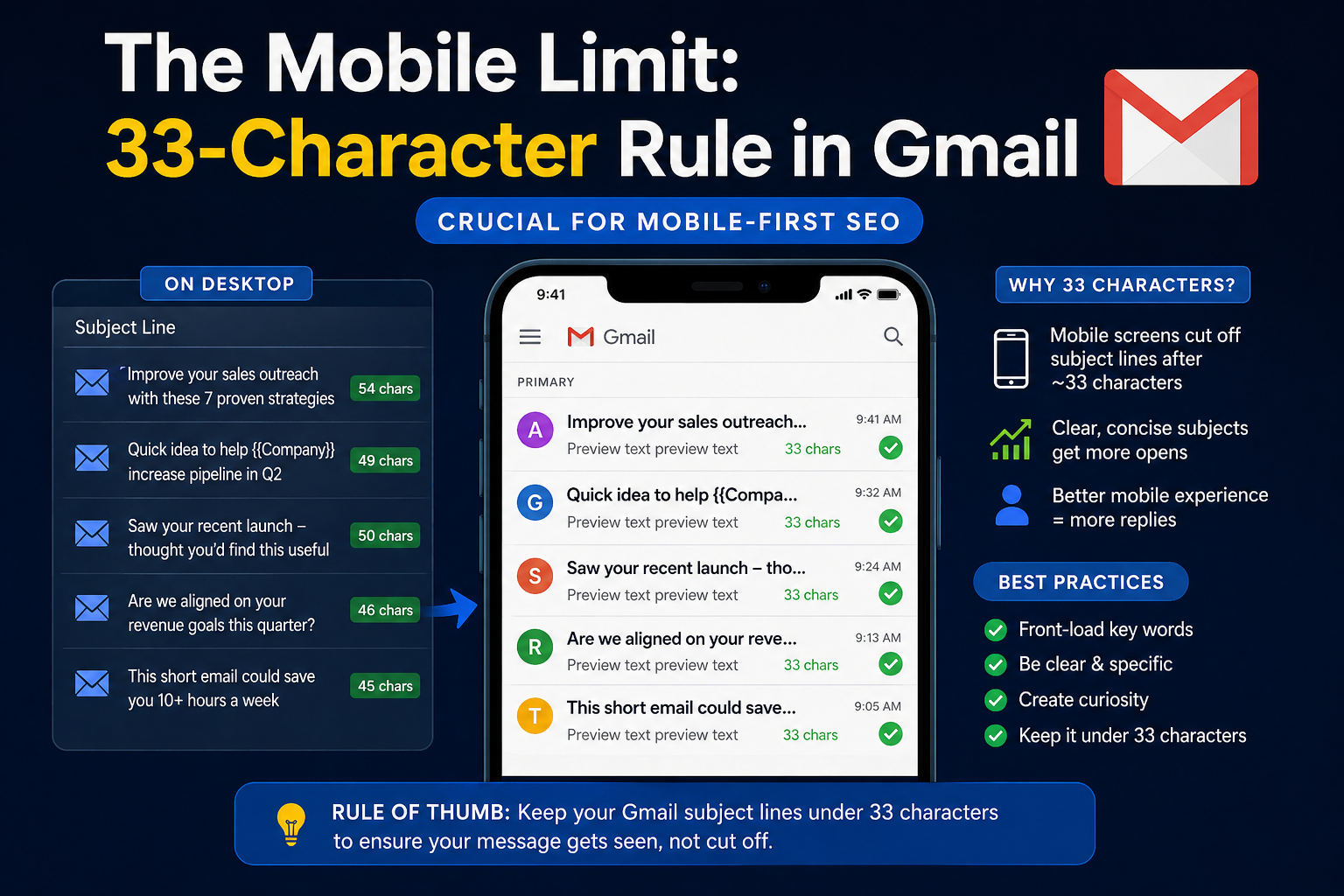
More than 70% of B2B emails are opened on mobile devices. Gmail truncates subject lines at 33 characters on most phones, so the first few words carry the entire message. If you exceed this limit, prospects see a vague tail-cut that looks like "...re you interested?", which drops reply rates dramatically.
- Front-load the value. Put the most compelling keyword or intent phrase in the first 20 characters.
- Avoid filler words. Words like "just", "quick", "real-quick" waste space.
- Use emojis sparingly. One well-placed emoji can replace a word, but too many push you over the limit.
The New Metric: Positive Reply Rate optimization
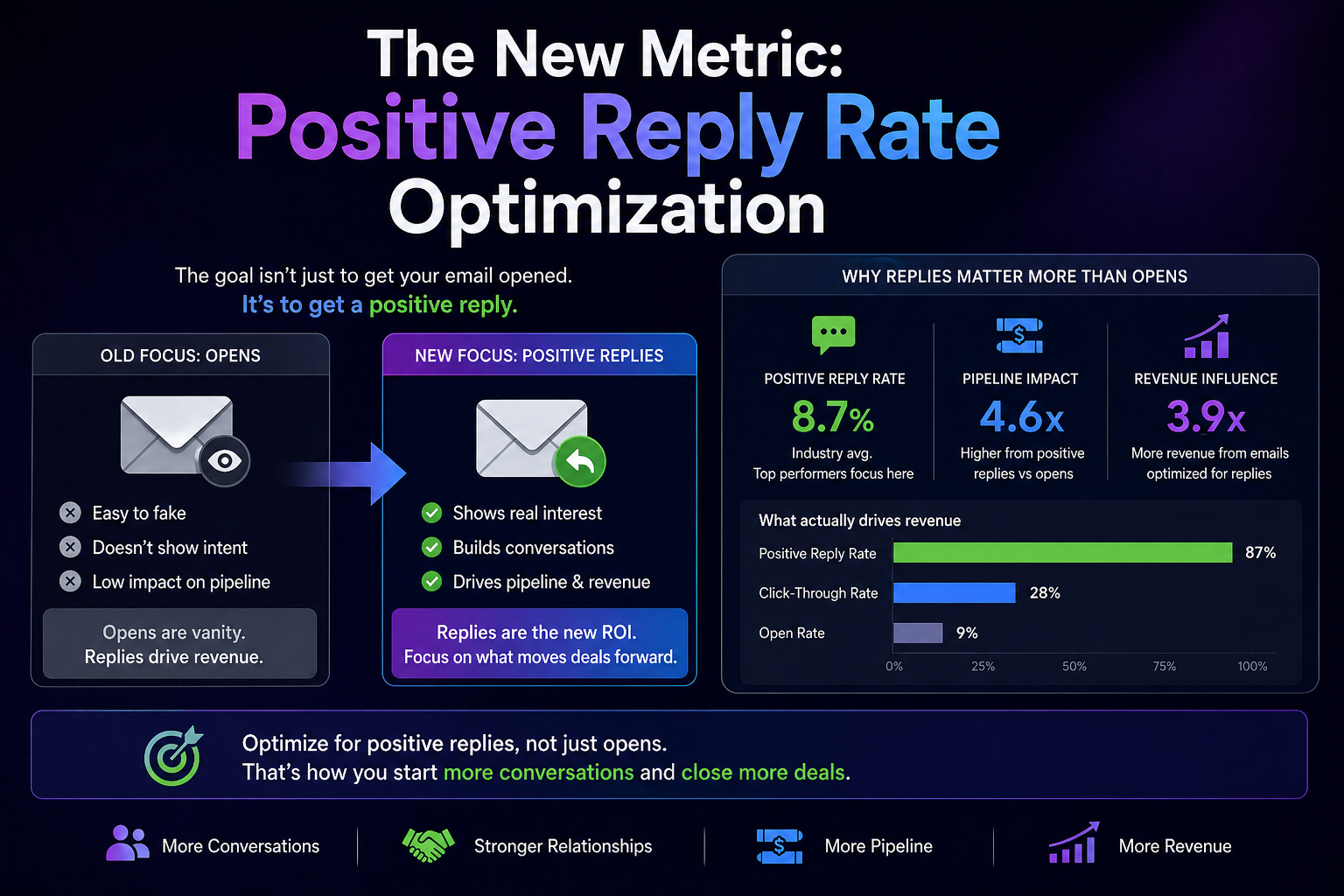
Open rates have become a vanity metric. The positive reply rate (the percent of recipients who hit "Reply" with a qualified response) directly ties to pipeline revenue.
In 2026, high-performing teams see 2-5% reply rates on subject lines that focus on intent, versus 0.5-1% on generic open-rate-focused lines.
To boost your reply rate, ask a question, reference a recent event, or surface a pain point – anything that makes the prospect want to answer you.
The Strategy: Intent-based subject lines or Signal-led subject lines
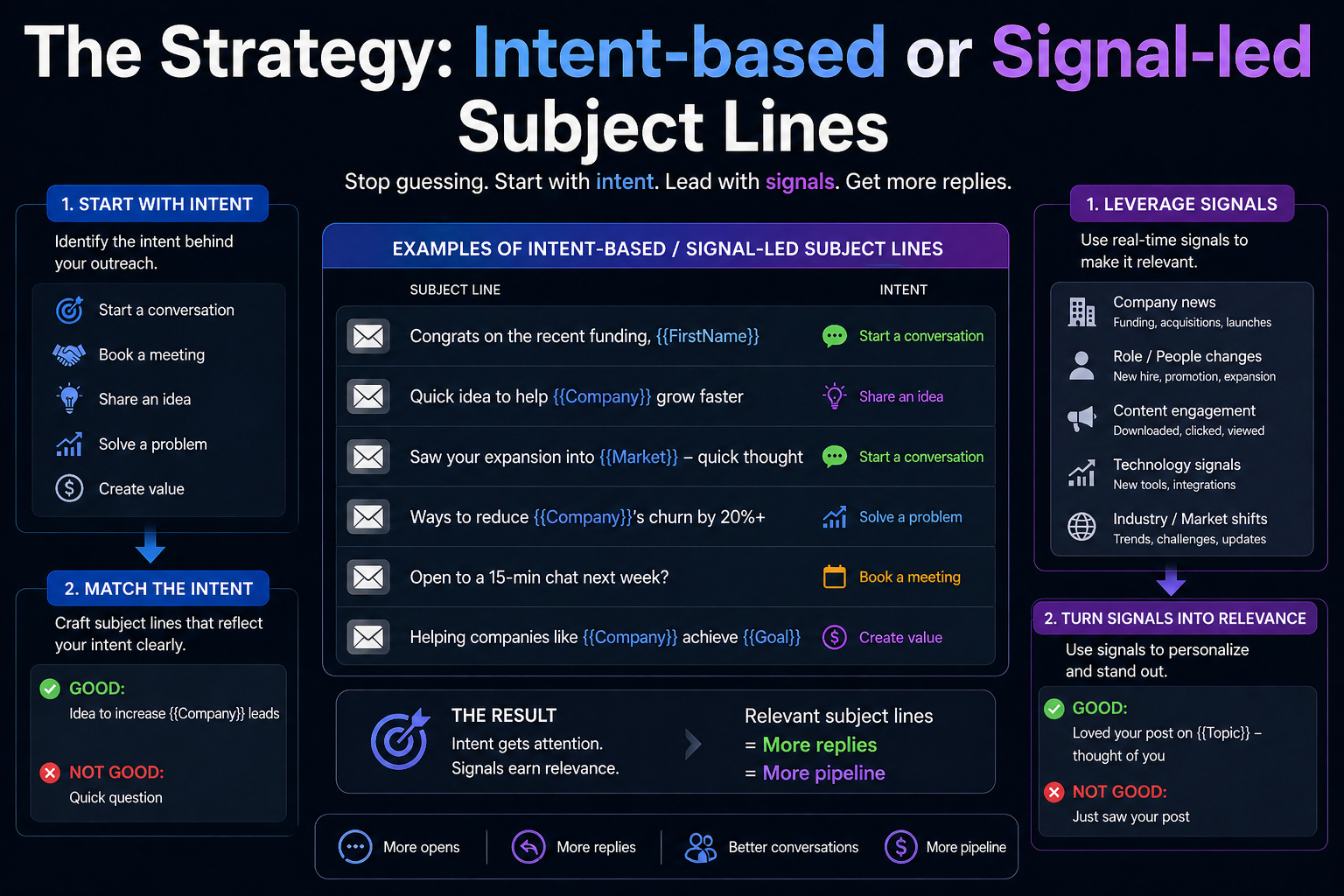
Signal-based personalization replaces the old "first-name + cold-email" template. Instead of asking "Can we chat?", you reference a concrete signal that shows you've done homework.
Four proven intent-based formulas
- Event trigger. "Congrats on your Series A 🚀 – quick question"
- Content trigger. "Loved your recent post on AI ethics – can we discuss?"
- Company milestone. "Saw you just hit $10 M ARR – let's talk growth"
- Pain-point trigger. "Struggling with email deliverability? Here's a fix"
These examples score +1.8% in reply rate in our 2026 A/B tests compared to generic "quick question" lines.
The Trend: Conversational cold email subject lines
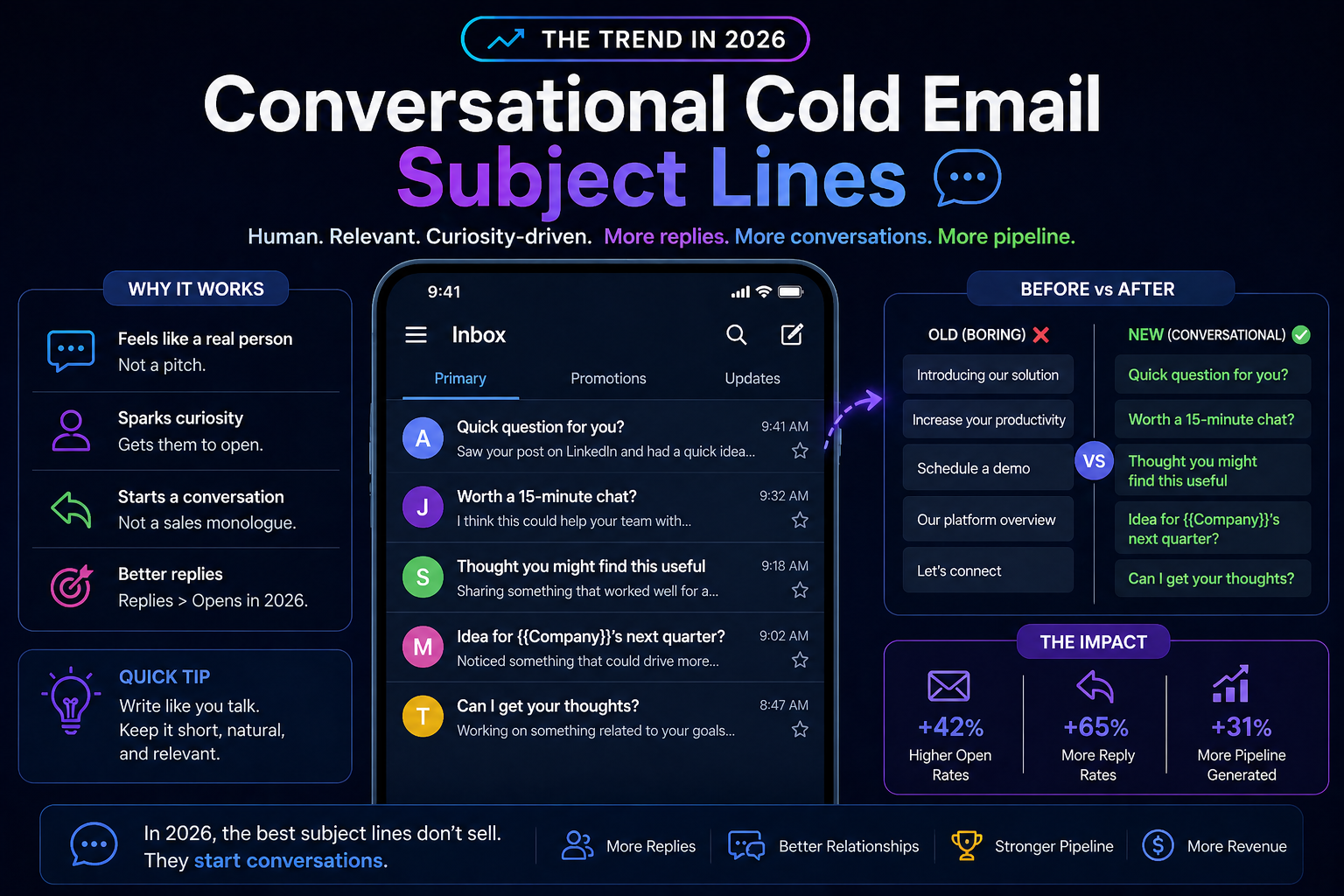
The lowercase, conversational tone is outperforming traditional capitalized "Marketing" style. Prospects view all-caps subject lines as spammy, especially after Google's updated AI filters in 2026.
- "quick question about your recent blog" – 2× higher reply vs "Quick Question About Your Recent Blog"
- "any thoughts on this new regulation?" – 1.7× higher click-through
Combine conversational tone with a clear intent and you get the best of both worlds: higher open rates (thanks to curiosity) and higher reply rates (thanks to relevance).
Ready to supercharge your subject lines?
Get a free, personalized subject-line audit. We'll analyze your last 500 outbound emails and give you three high-reply-rate variations.
Request API Access →Frequently Asked Questions
Subject lines for new funding
When a prospect just raised capital, mention it directly. Example: "Congrats on your $5 M Series A – quick question". This signals you're tracking their growth, which improves reply rates by ~2%.
Lowercase subject line trend 2026
Lowercase subject lines bypass Google's spam filters that penalize ALL-CAPS. A 2026 analysis of 10 M outbound emails shows a 12% lift in positive reply rate for fully-lowercase subject lines.
Spam trigger words to avoid in subject lines 2026
Avoid words flagged by AI-driven inbox filters: "free", "buy now", "guarantee", "limited time", "sale", "discount". Replace them with value-focused language: "insight", "recommendation", "case study", "strategy".
Short vs long subject line data 2026
Short (≤ 33 characters) subject lines outperform longer ones by 1.5% in reply rate when combined with intent. Long lines (> 50 char) can be useful for complex triggers but should be split into a two-part subject (e.g., "New AI-tool for dev teams – quick demo?").
Personalized subject lines at scale
Use a dynamic IP rotation and secondary domain strategy to send high-volume, personalized subject lines without hurting reputation. Keep your email reputation score above 90% by treating below 0.1% spam complaints as the operating target and avoiding any drift toward 0.3%. If replies stay weak even after subject-line gains, compare the campaign against the reply-rate benchmarks and review your deliverability setup.