Cold Emailing for Research: How to Email Professors and Get Replies
Cold emailing for research means reaching out to professors, lab directors, or researchers you do not personally know to ask about research opportunities. It works best when the email is short, specific, personalized, and respectful of the professor's time.
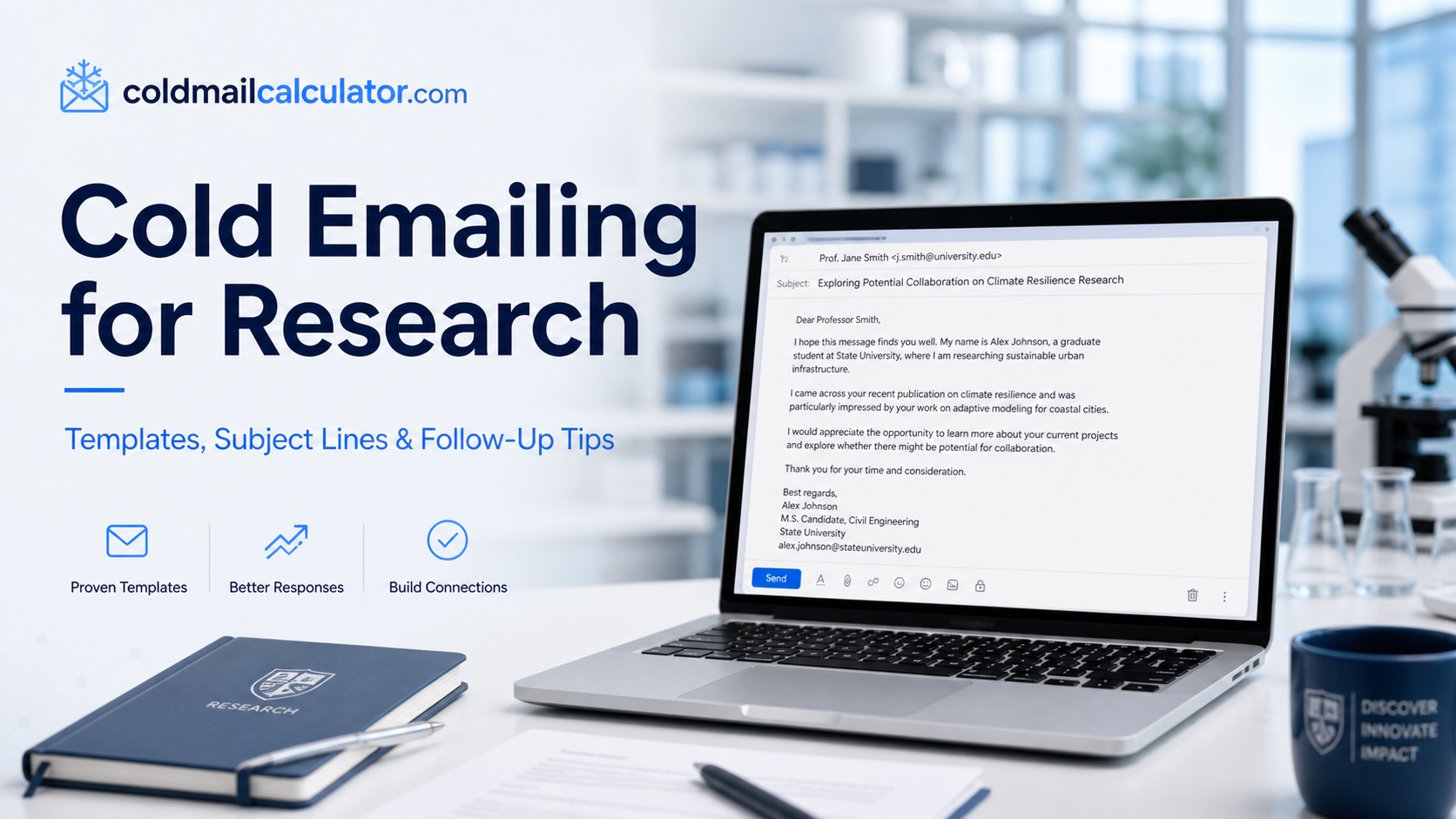
Best Answer: How to Cold Email for Research
The best cold email for research opportunities is a brief, personalized message that explains who you are, why a specific professor's work interests you, what skills or preparation you bring, and what you are asking for.
Keep it around 150 to 250 words, attach a resume or CV, mention your availability, and follow up once after 5 to 7 business days. The goal is not to impress with a long essay. The goal is to make it easy for a busy researcher to understand whether you might be a fit.
What Is Cold Emailing for Research?
Cold emailing for research is the process of contacting someone you do not already know to ask about joining a lab, helping with a project, volunteering for research experience, or applying for a research assistant role. In most cases, the person you email will be a professor, principal investigator, lab manager, postdoctoral researcher, or research coordinator.
This is common for undergraduate students, high school students, pre-med students, master's students, and anyone trying to get lab experience before graduate school, medical school, or a research-focused career. It is also useful for people looking for research assistant cold email opportunities outside a formal job posting.
A good research cold email is not a mass message. It is a small professional introduction. You are showing that you understand the professor's work enough to explain why you are reaching out, and that you can be useful or eager to learn without taking up too much time.
Does Cold Emailing Professors Actually Work?
Yes, cold emailing professors for research can work, but only when it is done correctly. Professors are busy. Many receive dozens or hundreds of emails every week from students, collaborators, administrators, journals, grant offices, and their own labs.
That means your email should not read like a personal statement. It should quickly show five things:
- Who you are.
- Why their research interests you.
- What you can contribute or what preparation you have.
- What you are asking for.
- When you are available.
You are not trying to guarantee a reply. No cold email can do that. You are trying to make a respectful, relevant ask that gives the professor enough information to say yes, forward you to someone else, or tell you when to check back.
Before You Email: Do 10 Minutes of Research
The fastest way to improve a cold email for research opportunities is to spend a few minutes learning what the researcher actually does. A professor can usually tell within the first few lines whether you read their lab page or sent the same message to everyone.
Before sending your email, use this checklist:
- Read the professor's lab page or faculty profile.
- Skim one or two recent papers, abstracts, project summaries, or conference descriptions.
- Check whether the lab mentions undergraduate, high school, summer, or research assistant opportunities.
- Look for current projects so you can mention one specific topic.
- Confirm the correct email address and spelling of the professor's name.
- Prepare a concise resume or CV before you reach out.
You do not need to understand every technical detail. You only need enough context to write one or two specific sentences that prove your interest is real.
Best Cold Email Structure for Research Opportunities
The best structure is simple. A professor should be able to scan your email and understand the point in less than 30 seconds.
- Subject line: Make it clear and specific.
- Greeting: Use "Dear Professor [Last Name]" unless their profile suggests another title.
- One sentence introduction: Share your name, school, year, and major or program.
- Specific research interest: Mention a topic, paper, project, or lab focus.
- Relevant background: Include coursework, lab skills, coding, statistics, writing, fieldwork, or previous projects.
- Clear ask: Ask whether the lab is accepting students or research assistants.
- Availability: State when and how much you can contribute.
- Polite closing: Thank them and attach your resume or CV.
If you also want to improve your general outreach math, our cold email calculator can help estimate how many emails you may need based on expected reply rates. For broader outreach context, you can also compare your expectations with our cold email reply rate benchmarks.
Cold Email Template for Research Opportunities
Use this template as a starting point, but personalize it before sending. The specific detail is what makes it work.
Subject: Undergraduate interested in [specific research area]

Dear Professor [Last Name],

My name is [Name], and I am a [year/major] at [school]. I'm reaching out because I'm interested in your work on [specific topic/project/paper].

I recently read about [specific detail], and I'm especially interested in [why it matters or what you want to learn]. My background includes [relevant coursework, skills, lab experience, coding, statistics, writing, etc.].

I wanted to ask whether your lab is currently accepting students or research assistants. I would be happy to help with [specific task if known] and can commit [hours per week] during [semester/summer/time period].

I've attached my resume/CV for context. Thank you for your time, and I'd be grateful for any opportunity to discuss whether I could contribute to your work.

Best,
[Name]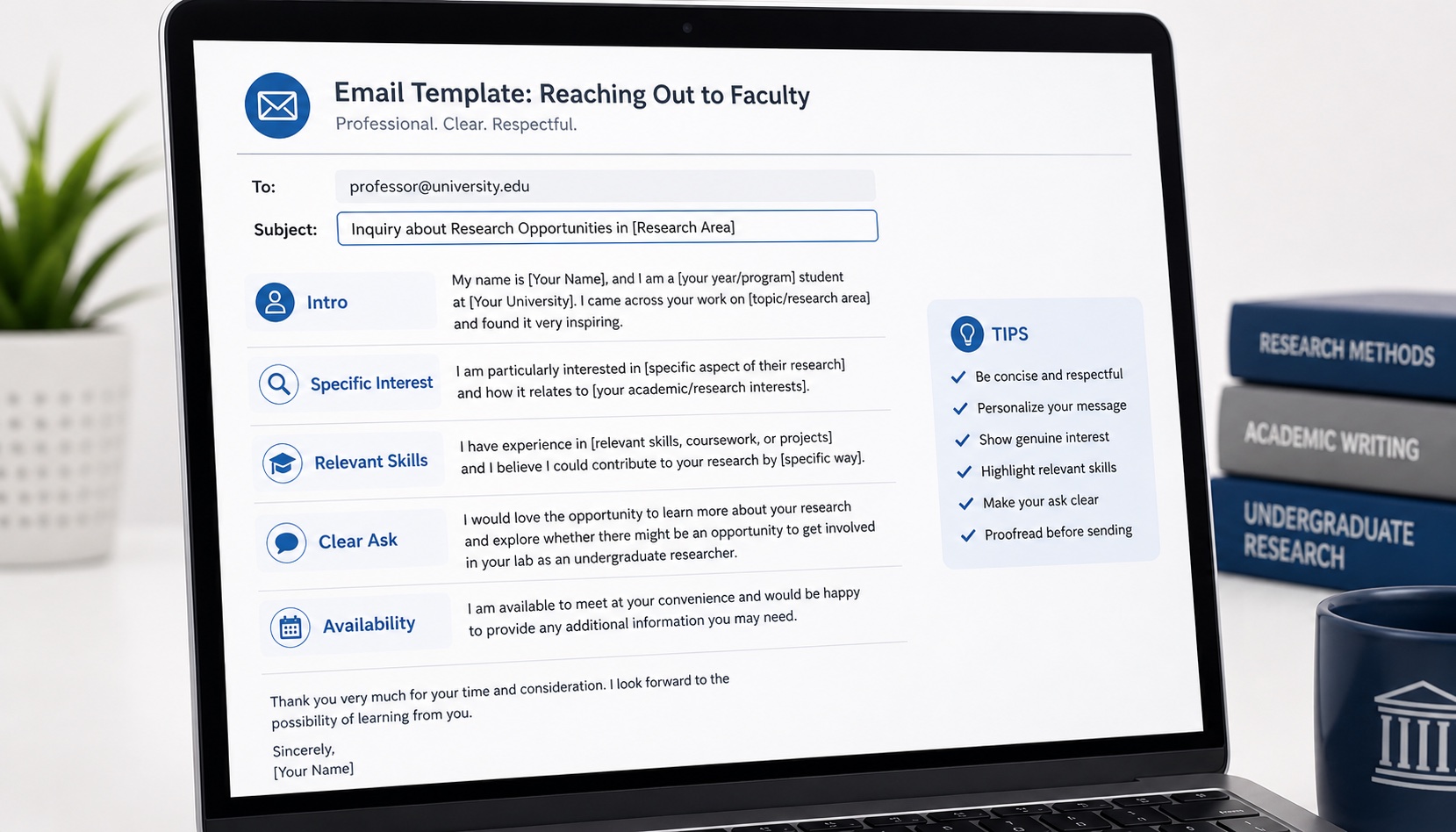
Shorter Cold Email Template
If you are emailing someone very busy, a shorter version can work well.
Subject: Research opportunity inquiry

Dear Professor [Last Name],

My name is [Name], and I am a [year/major] at [school]. I am interested in your work on [specific topic], especially [specific project, paper, or question].

My background includes [one or two relevant skills/classes/experiences], and I am hoping to get involved in research related to [area]. I wanted to ask whether your lab is accepting students or research assistants for [semester/summer].

I can commit [hours per week] and have attached my resume/CV for context. Thank you for your time.

Best,
[Name]
Cold Email Subject Lines for Research
A good cold email subject line for research should be plain and professional. Avoid clever lines, vague lines, or anything that looks like marketing.
- Undergraduate interested in [Research Area]
- Research opportunity inquiry
- Interested in your work on [Topic]
- Student seeking research assistant opportunity
- Question about joining your lab
- Prospective research assistant for [Lab/Topic]
- Summer research inquiry
- Interested in contributing to [Project]
- [School] student interested in [Topic]
- Availability for undergraduate research?
For more general examples outside research, see our guide to cold email subject lines. The research version should usually be more direct and less sales-oriented.
What to Attach
Attach only what helps the professor evaluate you quickly. For most students, that means a one-page resume or CV. If you have relevant lab work, coding projects, poster presentations, publications, fieldwork, or writing experience, include it there.
- Resume or CV: Usually worth attaching.
- Unofficial transcript: Only attach if it is useful or requested.
- Writing sample: Only attach for humanities, social science, policy, or writing-heavy research roles.
- GitHub or portfolio: Only include if it supports the research area, such as data analysis, coding, visualization, or technical writing.
Do not overload the email with five attachments. Too many files can make the message feel like work before the professor has even decided whether the opportunity exists.
How Long Should the Email Be?
A cold email to a professor should usually be 150 to 250 words. That is long enough to show real interest, but short enough to respect their time.
If the email is under 80 words, it may feel generic. If it is 500 words, it may get skimmed or saved for later and forgotten. Aim for three to five short paragraphs.
When to Send the Email
Weekday mornings are usually a good choice because your message is more likely to land during normal work hours. Avoid Friday evening, weekends, holidays, and the middle of exam-heavy academic periods when possible.
If you are looking for summer research, start 2 to 4 months before the opportunity would begin. If you want semester research, email before the semester starts or early enough that the lab can plan around you. Do not mass email 50 professors with the same generic message. A smaller batch of relevant, personalized emails is better.
How to Follow Up
Wait 5 to 7 business days before following up. Keep the follow-up short. You are not trying to pressure the professor. You are politely bringing the message back to the top of the inbox.
Subject: Following up on research opportunity inquiry

Dear Professor [Last Name],

I wanted to politely follow up on my previous email about possible research opportunities in your lab. I understand you are busy, so no worries if now is not a good time.

I remain very interested in your work on [topic] and would be grateful for the chance to contribute if there is an opening.

Thank you again for your time.

Best,
[Name]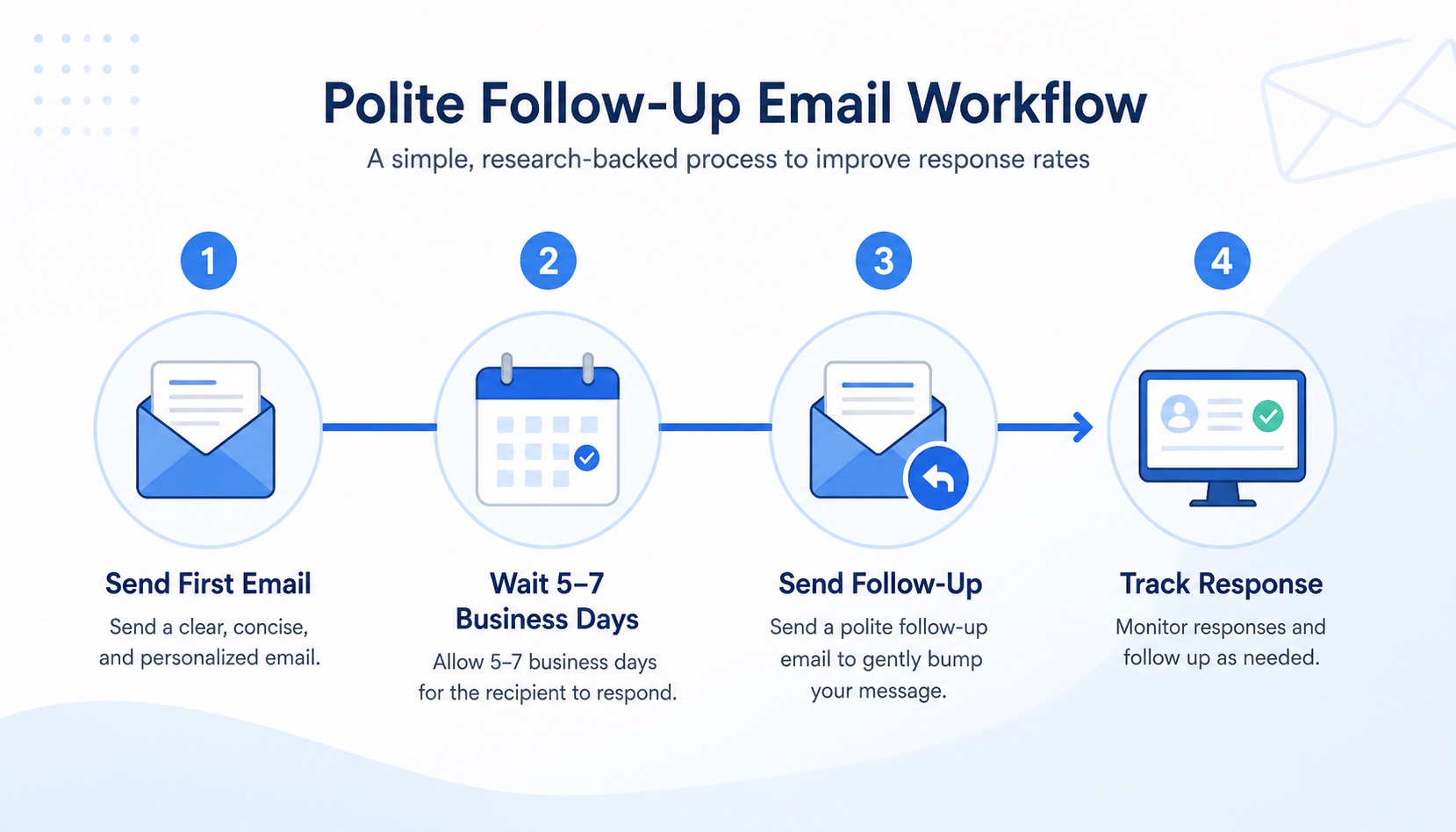
Common Mistakes to Avoid
Most weak research cold emails fail because they ask for an opportunity without showing relevance. Avoid these mistakes:
- Sending generic emails that could apply to any professor.
- Making the email too long.
- Asking "Can I do research?" without naming a topic or role.
- Not mentioning the professor's actual work.
- Attaching too many files.
- Sounding entitled or implying you deserve a spot.
- Emailing the wrong person or using the wrong name.
- Not following up once.
- Using a casual subject line.
- Copying the same email to many professors at once.
Personalization also affects deliverability and trust. If you are sending outreach at a larger scale, our cold email deliverability checklist explains why relevance and clean sending habits matter.
Example: Good vs Bad Cold Email
Bad Example
Dear Professor, I am very interested in research and want to join your lab. I am hardworking and passionate. Please let me know if you have any opportunities for me. I attached my resume. Thanks.
Why it fails: It does not mention the professor's name, research topic, specific project, relevant skills, availability, or clear reason for the match.
Good Example
Dear Professor Singh, my name is Maya Patel, and I am a second-year biology major at Northview University. I read about your lab's work on immune response in chronic inflammation, and I was especially interested in your recent paper on macrophage signaling. I have completed cell biology and statistics, and I have basic R experience from a class project. I wanted to ask whether your lab is accepting undergraduate assistants for the fall semester. I can commit 8 to 10 hours per week and have attached my resume for context.
Why it works: It is specific, brief, respectful, and easy to answer.
How Many Professors Should You Email?
Start with 5 to 10 highly relevant professors. Track who you contacted, when you sent the email, what topic you mentioned, and whether you followed up. If you do not get replies, improve the email before sending another batch.
Quality matters more than volume. A careful email to a professor whose work truly matches your interests has a better chance than a generic email sent to 50 people.
Final Checklist Before Sending
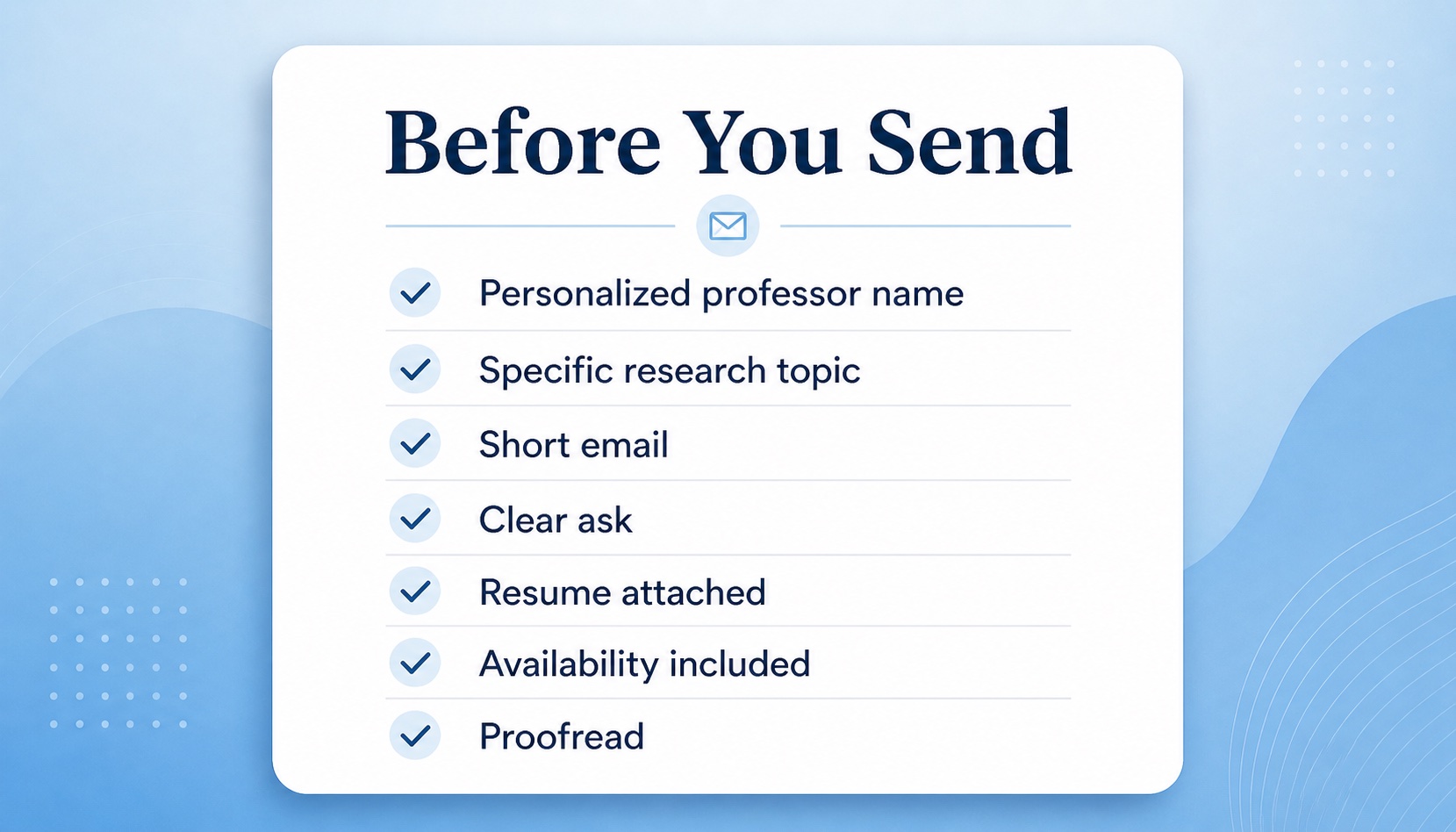
- Professor name is personalized and spelled correctly.
- Specific research topic, project, or paper is mentioned.
- The ask is clear.
- The email is short and easy to scan.
- Resume or CV is attached.
- Availability is included.
- Subject line is professional.
- The email is proofread before sending.
FAQ
What is cold emailing for research?
Cold emailing for research means contacting a professor, lab director, or researcher you do not personally know to ask about research opportunities, lab experience, or research assistant roles.
How long should a cold email to a professor be?
Usually 150 to 250 words. It should be specific enough to show real interest and short enough to respect the professor's time.
Should I attach my resume?
Yes. Attach a concise resume or CV so the professor can quickly see your coursework, skills, experience, and availability.
What subject line should I use?
Use a direct subject line such as "Undergraduate interested in [Research Area]" or "Research opportunity inquiry."
How many professors should I cold email?
Start with 5 to 10 highly relevant professors. Personalize each email and track your outreach before sending another batch.
Should high school students cold email professors for research?
Yes, but high school students should be clear about their preparation, schedule, supervision needs, and willingness to help with beginner-friendly tasks.
What if a professor does not reply?
Wait 5 to 7 business days and send one polite follow-up. If there is still no reply, move on and contact another relevant professor.
Planning a Larger Cold Email Campaign?
If you are planning a cold email campaign, use our cold email calculator to estimate how many emails you may need to send based on your expected reply rate.
Use the Cold Email Calculator