Planning guide
Cold Email Follow-Up Metrics That Matter
Follow-ups generate most replies, but they also carry fatigue risk. Here are the follow-up metrics worth tracking and how to know when to stop.
Last updated July 9, 2026 · ColdMailCalculator, operated by Wade Digital
The short answer
Most cold email replies come from follow-ups, not the first send — often 60–70% of total replies. The metrics that matter are reply contribution by touch, positive reply rate per touch, and fatigue signals (unsubscribes, spam complaints, and declining reply rate).
The goal is to capture follow-up replies without crossing into annoying. Track the curve, not just the total.
Reply contribution by touch
Tag every reply with the touch that earned it. You will usually see the first send do little, touches two to four do the heavy lifting, and later touches taper off. That distribution tells you where to focus copy effort and where diminishing returns begin.
Positive reply rate per touch matters more than raw replies — a later touch that draws lots of 'stop emailing me' replies is hurting, not helping.
Fatigue signals to watch
Rising unsubscribe or spam-complaint rate is the clearest stop sign. A declining reply rate across touches, or a growing share of negative replies, means the sequence is overstaying its welcome.
Keep a clear, easy opt-out on every touch and honor it immediately. Respectful stopping is better for deliverability and reputation than one more nudge.
When to stop following up
Stop when fatigue signals rise, when positive replies per touch approach zero, or after your planned number of touches with no engagement. A common respectful pattern is three to five touches spaced over a few weeks, but the right number depends on your audience and offer.
If the first touch and one follow-up produce nothing, the problem is usually targeting or offer, not cadence — fix that before adding more touches.
Tie follow-up metrics to the forecast
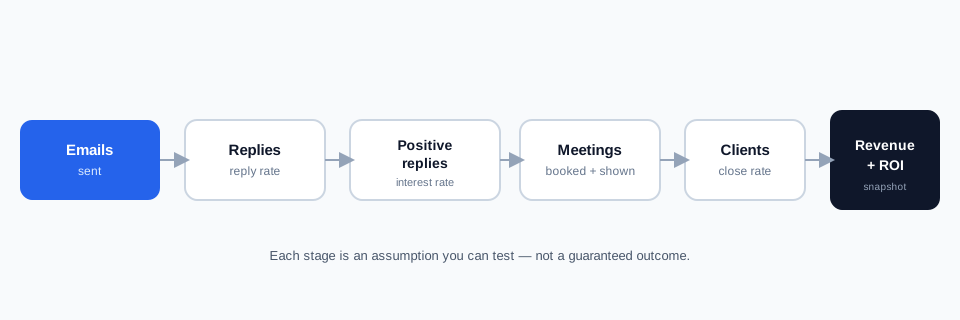
Because follow-ups drive replies, your follow-up assumptions feed directly into the calculator. Model a sequence with and without follow-ups to see how much they are worth, then track actual contribution against that model.
Follow-up metrics to track
- Tag replies by touch to see contribution by sequence position.
- Track positive reply rate per touch, not just totals.
- Monitor unsubscribe and complaint rate as stop signs.
- Stop when fatigue rises or positive replies per touch hit zero.
- Model follow-up impact in the calculator before scaling.
Common mistakes
- Counting total replies without separating follow-up contribution.
- Ignoring spam complaints as a fatigue signal.
- Adding touches when targeting or offer is the real problem.
- Sending follow-ups with no clear opt-out.
Frequently asked questions
Which follow-up gets the most replies?
Often touches two to four, with 60–70% of total replies coming from follow-ups rather than the first send. The exact peak depends on audience and offer, so tag replies by touch to find yours.
How many follow-ups is too many?
Stop when unsubscribes or complaints rise, when positive replies per touch approach zero, or after your planned sequence with no engagement. Three to five respectful touches is common, but audience fit decides.
When should I stop following up?
When fatigue signals appear (complaints, declining reply rate, more negative replies) or positive replies per touch reach zero. If early touches get nothing, fix targeting or offer before adding touches.
Related pages
Related guides
Put this into your own numbers
This article is educational planning content, not guaranteed results, legal advice, or compliance advice. Use the calculator to model your own assumptions.
Estimates are based on user-provided assumptions and are not guaranteed. See the disclaimer for details.