Planning guide
How to Optimize a Cold Email Sequence
How to optimize a cold email sequence by improving purpose, cadence, stop rules, reply quality, and follow-up contribution.
Last updated July 9, 2026 · ColdMailCalculator, operated by Wade Digital
The short answer
Cold email sequence optimization means making every touch useful, distinct, and respectful. Optimize audience-message fit first, then cadence, CTA friction, objection handling, stop rules, and follow-up reporting.
A sequence that creates more negative replies is not better just because total replies increased.
Optimization order
Start with the first email: audience fit, problem clarity, offer relevance, proof, and CTA. Then review follow-ups: each one should add context, answer a likely objection, or make the next step easier.
Finally, review stop rules. Replies, opt-outs, bounces, and suppression matches should remove people from the sequence without manual heroics.
How to measure a sequence
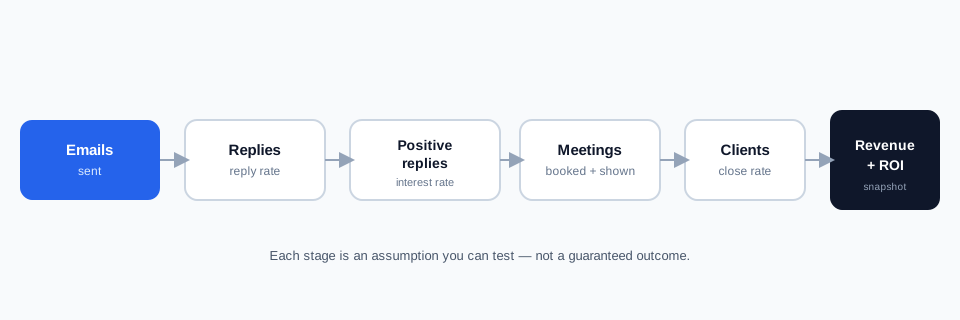
Measure reply contribution by touch, positive reply rate by touch, opt-outs, complaints, meetings, and cost per meeting. Do not optimize only for opens.
Sequence optimization checklist
- Every touch has a unique purpose.
- The CTA is low friction.
- Follow-ups add context instead of repeating the opener.
- Stop rules are enforced.
- Results are reviewed by positive replies and meetings.
Common mistakes
- Adding more touches when targeting is the real problem.
- Repeating the same pitch in every follow-up.
- Ignoring negative replies.
- Measuring opens instead of positive replies and meetings.
Frequently asked questions
How many emails should a cold sequence include?
Many teams start with one opener and two or three follow-ups, then adjust based on reply quality and fatigue signals.
What should each follow-up do?
Each follow-up should add useful context, handle a likely objection, or offer a simpler next step.
When should I stop a sequence?
Stop after a reply, opt-out, bounce, suppression match, or when positive replies approach zero and fatigue signals rise.
Related pages
Related guides
Put this into your own numbers
This article is educational planning content, not guaranteed results, legal advice, or compliance advice. Use the calculator to model your own assumptions.
Estimates are based on user-provided assumptions and are not guaranteed. See the disclaimer for details.