Planning guide
Cold Email Automation Risks to Avoid
The cold email automation risks that teams should review before scaling volume, personalization, follow-ups, and reporting workflows.
Last updated July 9, 2026 · ColdMailCalculator, operated by Wade Digital
The short answer
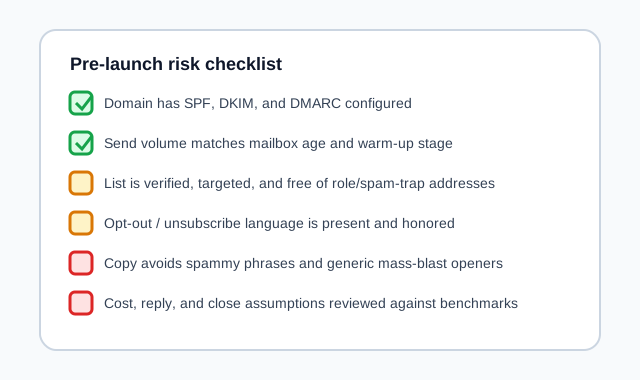
Cold email automation risk increases when teams automate volume before they validate targeting, copy, suppression, reply routing, and compliance boundaries. Automation should standardize a good process, not hide a bad one.
The highest-risk areas are inaccurate personalization, excessive cadence, weak suppression, poor reply ownership, and reports that celebrate sends instead of outcomes.
What to automate safely
Automation is useful for scheduling, reminders, deduplication, suppression, reporting, and workflow consistency. It is less safe for unreviewed personalization, legal interpretation, sensitive claims, or deciding who should be contacted.
Keep human review where judgment matters and automate repeatable checks around it.
Risk review before scaling
Before increasing volume, review bounces, complaints, opt-outs, positive replies, negative replies, and meetings. Scaling should follow quality signals, not replace them.
Automation risk checklist
- Suppression rules are tested.
- Personalization claims are verified.
- Reply ownership is assigned.
- Daily volume caps are enforced.
- Reports show positive replies and meetings.
Common mistakes
- Automating generic personalization.
- Letting sequences continue after replies or opt-outs.
- Scaling because sends are easy, not because responses are good.
- Ignoring compliance review.
Frequently asked questions
Is cold email automation risky?
It can be risky when it scales poor targeting, inaccurate personalization, or weak suppression. Used carefully, it can make workflows more consistent.
What should never be fully automated?
Compliance decisions, sensitive personalization claims, and audience judgment should not be fully automated without review.
How do I reduce automation risk?
Use suppression, volume caps, verified personalization, reply ownership, and KPI review before scaling.
Related pages
Related guides
Put this into your own numbers
This article is educational planning content, not guaranteed results, legal advice, or compliance advice. Use the calculator to model your own assumptions.
Estimates are based on user-provided assumptions and are not guaranteed. See the disclaimer for details.