Cold Email Follow-Up Timing: When to Send Each Follow-Up
Cold email follow-up timing matters because most replies do not arrive from the first message. The right cadence gives prospects time to read, think, and respond while keeping your campaign polite, measurable, and deliverability-safe.
Short answer
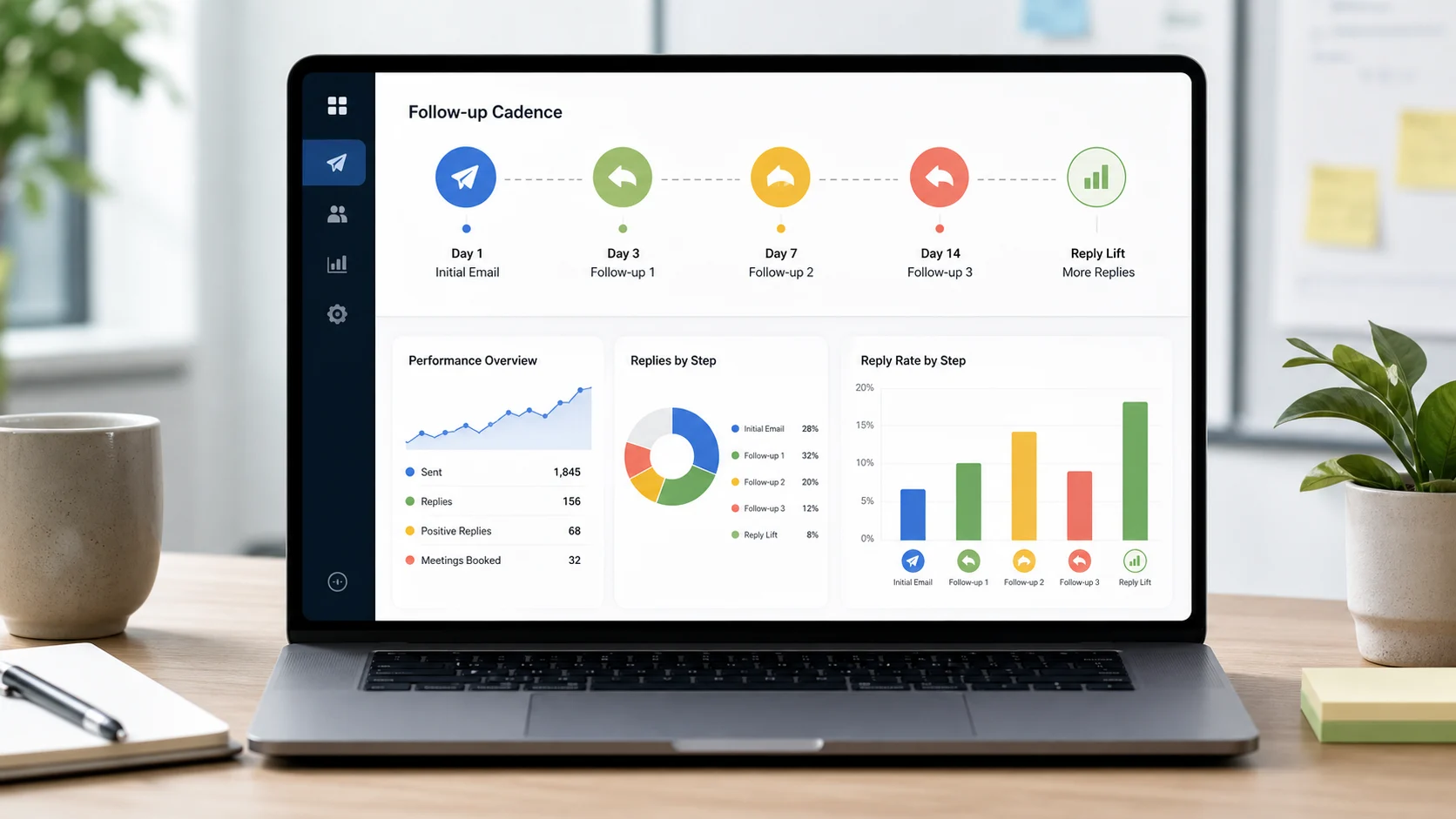
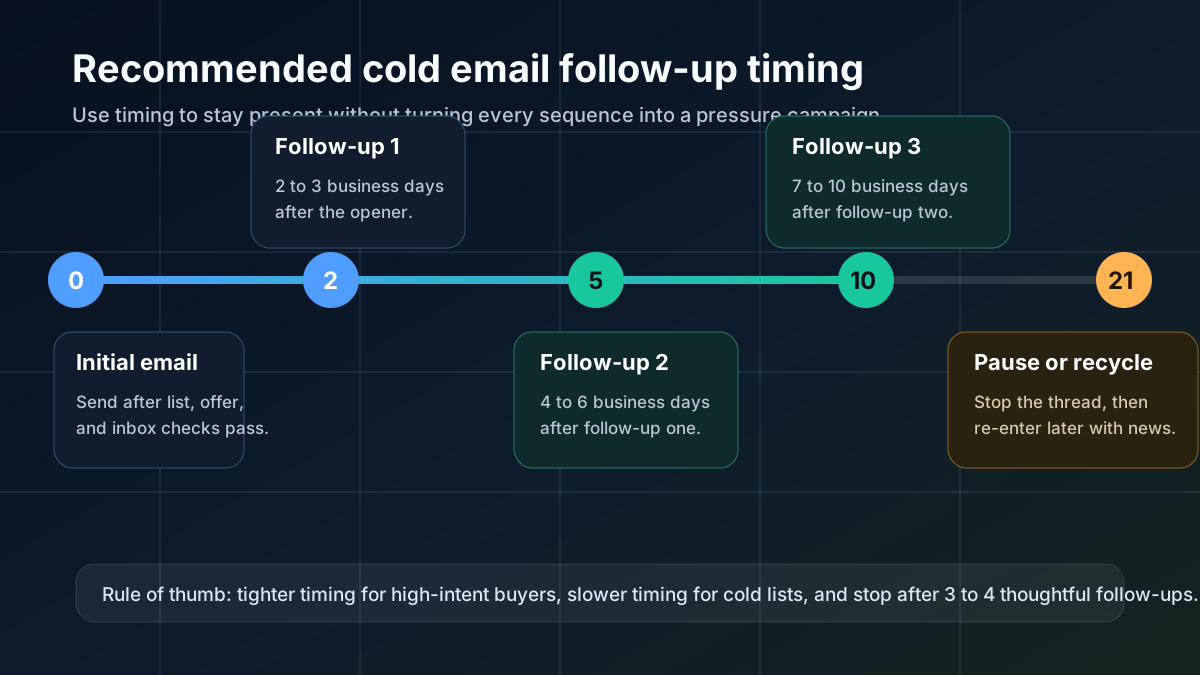
For most B2B cold email campaigns, send the first follow-up 2 to 3 business days after the opener, the second follow-up 4 to 6 business days later, and the third follow-up 7 to 10 business days after that. Stop after 3 to 4 thoughtful follow-ups unless the prospect has shown clear intent.
- Use shorter gaps for high-intent, narrow ICP campaigns.
- Use longer gaps for colder lists, senior buyers, or sensitive offers.
- Measure timing by positive replies and meetings, not just total replies.
Timing cannot rescue a weak list or vague offer. It works best when the original email is relevant and each follow-up adds a reason to reply.
The Best Follow-Up Timing for Cold Email
A practical cold email follow-up schedule starts with respect for two realities. First, prospects are busy and may need more than one touch. Second, aggressive follow-ups can create complaints, unsubscribes, and lower future deliverability. The goal is not to send as quickly as possible. The goal is to stay visible long enough to earn a response from the right people.
For a standard B2B campaign, use this baseline cadence:
| Step | Recommended timing | Purpose | What to avoid |
|---|---|---|---|
| Initial email | Day 0 | Introduce the problem, relevance, and low-friction CTA | Long pitch, vague personalization, multiple asks |
| Follow-up 1 | 2 to 3 business days later | Make the ask easier to answer | "Just bumping this" with no new context |
| Follow-up 2 | 4 to 6 business days later | Add proof, a different angle, or a sharper pain point | Repeating the opener in different words |
| Follow-up 3 | 7 to 10 business days later | Offer a clean close-the-loop message | Pressure, guilt, fake scarcity, or passive aggression |
| Recycle | 3 to 8 weeks later | Restart only with a new trigger, asset, or offer | Keeping the same thread alive forever |
Why the First Follow-Up Should Usually Wait 2 to 3 Business Days
The first follow-up should arrive soon enough that the original message is still familiar, but not so soon that it feels automated or impatient. Two to three business days is a useful default because it gives the prospect at least one full workday to notice the email, check internally, or decide whether the problem is relevant.
If your first message was sent on Monday morning, a Wednesday or Thursday follow-up is usually reasonable. If you send the opener on Friday afternoon, wait until the following Tuesday or Wednesday. Weekend timing often distorts the sequence because many people do not treat weekend inbox activity as real business time.
Follow-up one should reduce friction. Instead of restating the full pitch, ask a simpler question, point to the most relevant outcome, or offer a narrower next step. For example, "Worth comparing this against your current outbound CAC?" is usually easier to answer than a paragraph asking for a demo.
When to Send the Second Follow-Up
The second follow-up should usually come 4 to 6 business days after the first follow-up. This is where many campaigns either become useful or annoying. A good second follow-up adds something: a proof point, a benchmark, a short example, a new observation about the account, or a more precise version of the offer.
If follow-up one asks whether the problem matters, follow-up two can show why it matters. For ColdMailCalculator users, this is often where the campaign connects timing to economics. A reply is not just a vanity metric. If better timing increases positive replies or meetings, it can reduce cost per booked call and improve ROI.
Use the ColdMailCalculator to model a simple scenario. Keep the same list size and cost, then compare a sequence with a 2% reply rate against one with a 3% reply rate. If positive replies and booking rate stay healthy, that extra point can change the entire campaign forecast.
When to Send the Third Follow-Up
The third follow-up should slow down. Seven to ten business days after the second follow-up gives the prospect space and keeps your sequence from feeling like a daily nudge. This message should not sound frustrated. It should be calm, direct, and easy to ignore without creating a negative impression.
A good third follow-up often works as a close-the-loop note. It can say that you will pause unless the topic is relevant, then restate the specific reason you reached out. The best version is short and confident: one sentence of context, one sentence of value, and one simple yes-or-no question.
This is also the point where you should be honest about quality. If the list is broad and the prospect has shown no engagement, stop. If the account is high-value and there is a real trigger, you can recycle later with a different message rather than pushing the same thread until it feels stale.
How Many Follow-Ups Should You Send?
Most cold email campaigns should use 3 to 4 follow-ups after the initial email. More than that can work for narrow account-based outreach, but only when each message has a distinct reason to exist. If every follow-up is a bump, the sequence is too long.
The right number depends on buyer value, list fit, and offer urgency. A high-ACV SaaS campaign to a tightly researched account list can justify more thoughtful touches. A broad local services campaign should usually stay shorter, because lower relevance plus high frequency can create complaints faster.
| Campaign type | Typical follow-ups | Timing style | Success metric |
|---|---|---|---|
| Broad B2B list | 2 to 3 | Slower, conservative spacing | Positive replies without complaint spikes |
| Targeted ICP campaign | 3 to 4 | Baseline cadence with useful new angles | Positive reply rate and booked meetings |
| Account-based sales | 4 to 6 across channels | Longer timeline, more research per touch | Qualified conversations and opportunities |
| Event or deadline campaign | 2 to 4 | Compressed, but still business-day aware | Timely replies and booked calls |
Follow-Up Timing Mistakes That Hurt Replies
The biggest timing mistake is treating a sequence as a countdown timer instead of a conversation attempt. Automated spacing is fine, but the content has to match the delay. A message sent two days later should feel like a light nudge. A message sent two weeks later should bring a stronger reason to re-engage.
- Sending every follow-up one day apart, especially to senior buyers.
- Using weekends as if they were normal business days.
- Restarting a thread without any new context.
- Tracking total replies while ignoring negative replies and unsubscribes.
- Using fake urgency when there is no real deadline.
- Continuing after a prospect says no, not now, or unsubscribe.
Timing should support trust. If prospects complain, unsubscribe, or reply negatively, the sequence is not "working" just because it creates activity. It is pulling future campaign performance forward at a cost.
How Timing Affects ROI
Follow-up timing affects ROI through three levers: delivered emails, positive reply rate, and meeting booking rate. If better timing lifts positive replies without increasing complaints, your cost per booked meeting can fall. If more follow-ups create mostly negative replies, the forecast may look busier while actual revenue quality gets worse.
Model timing changes as scenarios. Start with your current sequence as the base case, then create a conservative improvement case. For example, if your campaign sends 2,000 emails at 90% delivery, a move from 2% to 2.8% total replies creates about 14 extra replies. The business question is how many of those are positive and how many become meetings.
This is why positive reply rate matters more than raw reply rate. A well-timed sequence should increase useful replies, not just objections. It should also give the sales team enough context to book qualified meetings instead of chasing lukewarm responses.
Forecast your follow-up sequence before sending
Change reply rate, positive reply rate, booking rate, and campaign cost to see how follow-up timing changes meetings, clients, revenue, and ROI.
Use the ColdMailCalculatorHow to Adjust Timing by Segment
Do not use one cadence for every list. Small business owners, enterprise executives, agencies, founders, and local service operators all respond to time differently. The more senior or expensive the buyer, the more your follow-up should feel intentional. The more urgent the problem, the more you can compress the first two touches.
Segment timing by buyer context. If a company just raised funding, hired sales leaders, posted a relevant job, launched in a new market, or announced a tool change, a tighter sequence can make sense. If your list is built from a broad industry export, slow down and protect sender reputation.
Also watch time zones. Sending a follow-up at 7 a.m. in your time zone may land at an awkward hour for the prospect. Use business-hour windows where possible, especially for decision-makers who receive heavy inbound volume.
A Simple Follow-Up Template Framework
You do not need a complicated script for each step. You need a clear reason for each message. Use this framework:
- Follow-up 1: simplify the question and make it easy to say yes or no.
- Follow-up 2: add proof, a benchmark, or a specific account observation.
- Follow-up 3: close the loop politely and invite a quick correction.
- Recycle: start a new thread only when you have a new trigger or asset.
For sequence structure and copy examples, pair this timing guide with the cold email follow-up sequence guide. Timing tells you when to send. Sequence strategy tells you what each touch should accomplish.
Final Takeaway
The best cold email follow-up timing is steady, business-day aware, and tied to intent. Start with 2 to 3 business days before the first follow-up, 4 to 6 business days before the second, and 7 to 10 business days before the third. Then adjust based on list quality, buyer urgency, reply sentiment, and meeting conversion.
Good timing does not mean sending more messages. It means giving each message enough space and enough value to earn a real response.
FAQ
What is the best time to send a cold email follow-up?
For most B2B campaigns, send follow-ups during the prospect's normal business hours, usually mid-morning or early afternoon on Tuesday through Thursday. The exact hour matters less than relevance, list quality, and sequence spacing.
How long should I wait before following up on a cold email?
Wait 2 to 3 business days before the first follow-up. If the original email was sent late Friday or before a holiday, wait until the prospect has had at least one normal workday to see it.
Is it okay to follow up the next day?
Next-day follow-up can work for urgent event-based outreach or warm intent, but it is too aggressive as a default for cold B2B lists. Use it carefully and monitor negative replies.
When should I stop following up?
Stop after 3 to 4 thoughtful follow-ups for most campaigns, or immediately when someone says no, asks to unsubscribe, or indicates the topic is not relevant.