Cold Email Subject Line Benchmarks: What to Measure Besides Opens
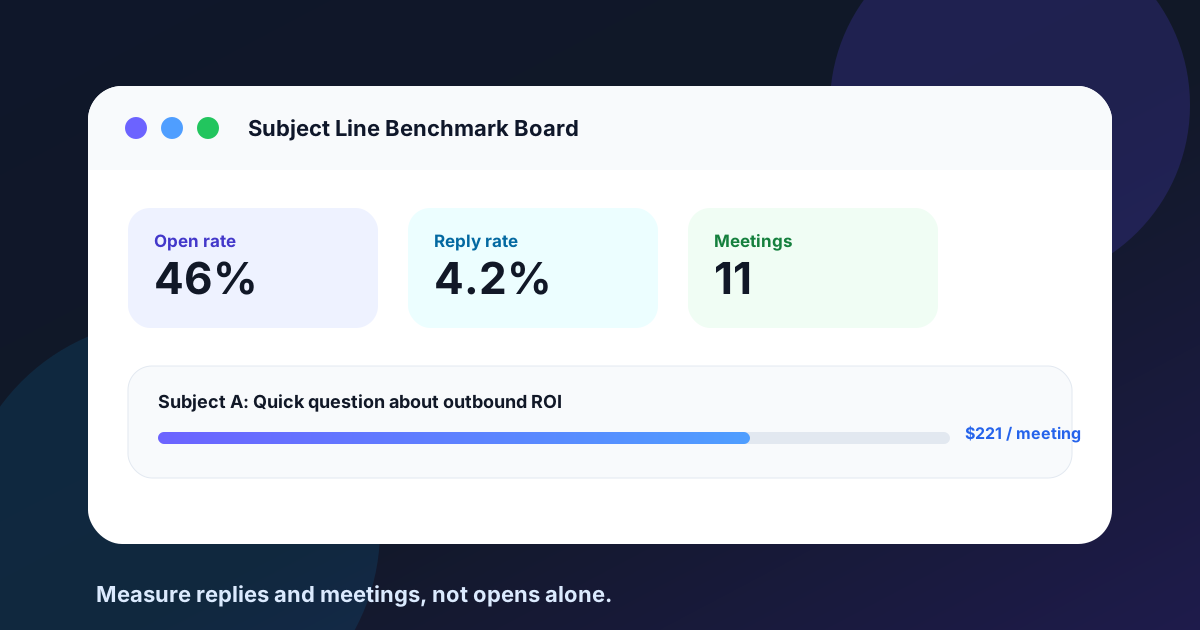
Cold email subject line benchmarks are useful only when they connect to replies, positive replies, booked meetings, and revenue. A subject line with a high open rate can still lose money if it attracts curiosity clicks from the wrong buyers. For 2026 planning, treat open rate as a diagnostic metric and judge subject lines by their effect on the full outbound funnel.
Short answer
A good cold email subject line is not the one with the highest open rate. It is the one that produces the best mix of:
- Delivered emails
- Open rate, when tracking is reliable
- Reply rate
- Positive reply rate
- Booked meeting rate
- Complaint and unsubscribe risk
- Cost per meeting
- Pipeline ROI
Why Subject Line Benchmarks Changed
Cold email subject lines used to be judged by one number: open rate. If a subject line got more opens, it looked like the winner. That is too shallow for modern outbound. Privacy changes, image loading behavior, inbox previews, and recipient habits make open tracking less clean than it used to be. More important, open rate does not tell you whether the right people replied.
In 2026, the better benchmark is downstream movement. Did the subject line earn replies from qualified prospects? Did those replies turn positive? Did positive replies turn into meetings? Did those meetings create enough revenue to justify the campaign cost? Those are the questions a buyer, agency, or founder actually cares about.
This matters even more for high-intent searches like cold email ROI calculator, cold email cost per meeting calculator, and cold email reply rate benchmarks. People searching those terms are not looking for clever wording. They are trying to decide whether outbound can create pipeline at an acceptable cost.
Subject Line Benchmarks to Track
Use the scorecard below when testing subject lines. It keeps open rate in the picture without letting it dominate the decision.
| Metric | What it tells you | How to use it |
|---|---|---|
| Delivery rate | How much of the campaign reached recipients | Separate subject line performance from list and infrastructure problems. |
| Open rate | Whether the subject and sender created enough interest to inspect the email | Use as a directional signal, not the final winner metric. |
| Reply rate | How many recipients answered at all | Compare subject lines by response, not curiosity. |
| Positive reply rate | How many replies had real commercial intent | Protect against clickbait subject lines that create bad replies. |
| Booked meeting rate | How many positive replies became calls | Connect copy and offer quality to pipeline. |
| Cost per meeting | Campaign cost divided by qualified meetings booked | Pick the subject line that supports better economics. |
What Is a Good Cold Email Subject Line Open Rate?
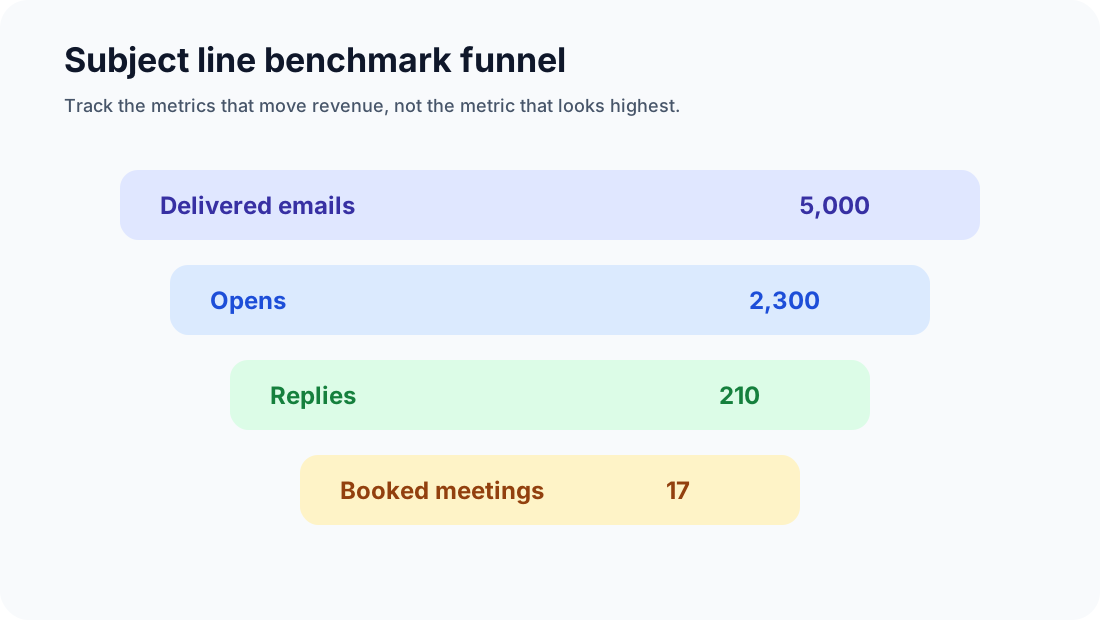
For planning, many teams still look at open rate ranges because they are easy to understand. But the number depends on sender reputation, audience, industry, list quality, preview text, tracking settings, and whether opens are measured at all. A campaign with a 55% open rate and a weak reply rate can be worse than a campaign with a 35% open rate and strong positive replies.
A practical benchmark is this: if opens are very low, check deliverability, sender name, audience fit, and subject clarity. If opens are acceptable but replies are weak, the subject line may be attracting attention without setting up a relevant message. If replies are high but meetings are low, the issue may be offer fit, qualification, or call-to-action friction.
Google's sender guidance also makes complaint behavior impossible to ignore. Google recommends keeping spam rates reported in Postmaster Tools below 0.10% and avoiding 0.30% or higher. That means a subject line that creates curiosity but annoys recipients can hurt more than it helps, especially at scale.
The Problem With Clickbait Subject Lines
Clickbait can win the open-rate test and lose the business test. Lines like "quick question," "following up," or vague curiosity hooks may get attention, but they can also create confusion. If the email body does not quickly match the promise of the subject line, recipients may ignore it, complain, or reply negatively.
The safest subject lines are usually specific enough to attract the right reader and plain enough to avoid looking like a trick. A subject line for a roofing lead generation campaign might mention "roofing estimates in Dallas" instead of "growth idea." A SaaS campaign might mention "demo no-show recovery" instead of "question." Specificity narrows the audience, but it often improves reply quality.
When you benchmark subject lines, do not ask, "Which one made people open?" Ask, "Which one made qualified prospects continue the conversation?" That framing immediately changes what you test.
Example Subject Line Benchmark Scorecard
Imagine an agency tests three subject lines across similar prospect segments. The curiosity hook gets the highest open rate, but the specific pain subject line creates more qualified replies and more meetings. The discount angle gets attention but attracts low-intent responses.
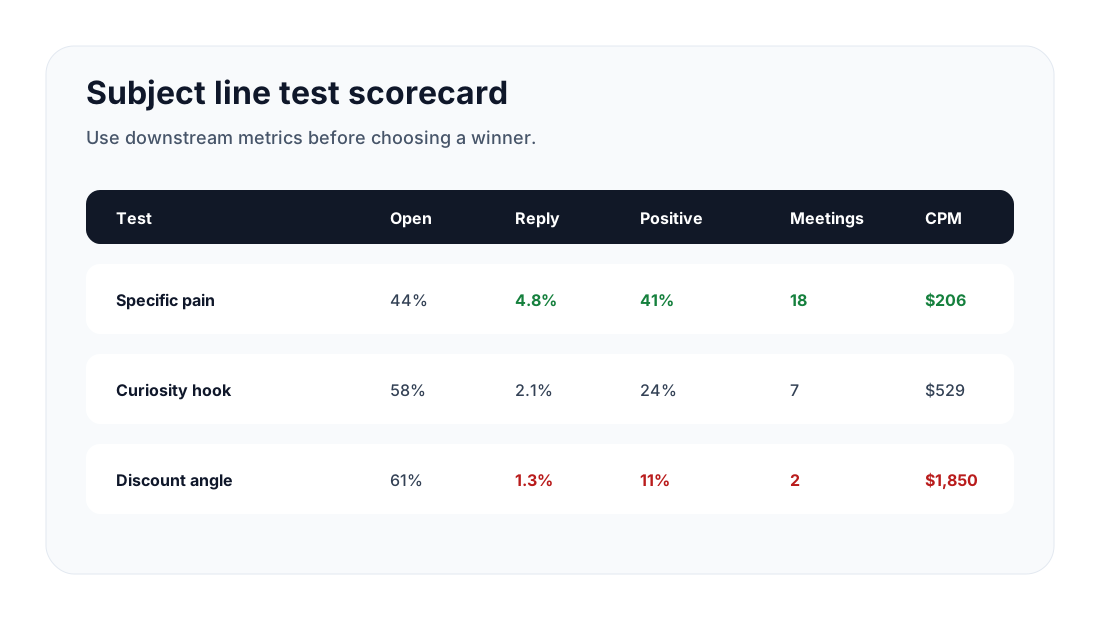
In this example, the specific pain subject line wins even though its open rate is not the highest. It produces more positive replies, more meetings, and a lower cost per meeting. That is the kind of benchmark that matters when you are deciding whether to scale, pause, or rewrite a campaign.
Forecast replies, meetings, and ROI
Use ColdMailCalculator to model how subject line tests affect replies, positive replies, booked meetings, revenue, and cost per meeting.
Use the ColdMailCalculatorHow to Run a Fair Subject Line Test
A fair test needs more than two subject lines and a spreadsheet. Start with one audience segment, one offer, and one email body. Change only the subject line. If you change the body, list, sender, timing, and call to action at the same time, you will not know what caused the result.
Use enough delivered emails to avoid overreacting to random noise. A tiny sample can make one subject line look amazing because two extra people replied. For small lists, treat the result as a clue. For bigger lists, compare delivered emails, replies, positive replies, and meetings before declaring a winner.
Track negative signals too. If one subject line produces more unsubscribes, spam complaints, or confused responses, it may not be worth scaling even if the open rate is strong. Subject lines are part of deliverability behavior, not just copywriting.
Subject Line Types Worth Testing
There is no universal best subject line, but most useful tests fall into a few categories. The strongest version depends on your list, market, offer, and sender credibility.
Specific pain
Names the operational problem the prospect likely cares about. This often creates better reply quality because it pre-qualifies the reader.
Relevant outcome
Points to a measurable result without hype. Useful for buyers already aware of the problem.
Segment reference
Mentions the niche, role, market, or trigger that explains why the email is relevant.
Try to avoid subject lines that overpromise, mimic internal emails, or imply a relationship that does not exist. They may work once, but they can train recipients to distrust the sender. In a market where inbox providers watch engagement and complaints, that tradeoff is rarely worth it.
How Subject Lines Affect Cost Per Meeting
Subject line performance becomes much clearer when translated into cost per meeting. Suppose a campaign costs $3,000 and one subject line books 10 meetings. The cost per meeting is $300. If another subject line books 15 meetings from the same cost and audience quality, cost per meeting falls to $200. That difference can decide whether an agency campaign looks profitable.
Subject line cost per meeting formula
Use full campaign cost, including data, tools, inboxes, verification, and management time.
This is why high-intent operators should connect subject line tests to the Cold Email Cost Per Meeting Calculator. The calculator helps turn reply and booking assumptions into a financial number, making subject line decisions less emotional.
Benchmarks by Campaign Goal
Not every campaign should optimize for the same subject line metric. A founder validating a new offer may care most about positive replies. A mature agency may care most about cost per booked meeting. A SaaS team with a long sales cycle may care about demo quality and pipeline value.
If the campaign goal is market feedback, track reply quality and objections. If the goal is sales meetings, track booked meeting rate. If the goal is revenue, track close rate and average deal value after the meeting. This keeps your benchmark aligned with the actual business outcome.
For planning ranges, pair this article with the cold email reply rate benchmarks guide and the positive reply rate guide. Together, they show why opens are only one step in the funnel.
Building subject line testing into a dashboard?
Use the ColdMail API to forecast replies, meetings, clients, revenue, and ROI from campaign assumptions.
Explore the ColdMail APISubject Line Benchmark Checklist
- Test one variable at a time.
- Compare delivered emails, not just sent emails.
- Keep open rate as a diagnostic metric.
- Use reply rate and positive reply rate as the main copy-quality signals.
- Track booked meetings before scaling spend.
- Monitor unsubscribes, complaints, and confused replies.
- Calculate cost per meeting for each subject line winner.
- Keep the subject line aligned with the body of the email.
Final Takeaway
Cold email subject line benchmarks are useful when they help you make better campaign decisions. Open rate can still reveal deliverability and attention problems, but it should not be the final judge. The real winner is the subject line that creates qualified replies, booked meetings, and acceptable ROI without increasing complaint risk.
Before scaling a subject line test, model the downstream math. Use the ColdMailCalculator to forecast replies, positive replies, meetings, clients, revenue, and ROI from your campaign assumptions.
FAQ
What is a good cold email subject line benchmark?
A useful benchmark looks beyond opens and includes reply rate, positive reply rate, booked meeting rate, complaint risk, and cost per meeting.
Should I optimize cold email subject lines for open rate?
Use open rate as a diagnostic signal, but optimize for replies, positive replies, meetings, and ROI. A high open rate can still produce weak campaign economics.
How do subject lines affect cold email ROI?
Subject lines affect who opens, who replies, and who books a meeting. Those downstream changes influence cost per meeting, customer acquisition cost, revenue, and ROI.
What subject lines work best for B2B cold email?
Plain, specific subject lines that match the prospect's role, pain, market, or trigger usually create better reply quality than vague curiosity hooks.
How long should a cold email subject line be?
Shorter subject lines are often easier to scan, but length is less important than clarity, relevance, and alignment with the email body.