Planning guide
Cold Email vs Cold DM ROI
Cold email and cold DM (LinkedIn, Twitter/X, or other platform direct messages) solve similar problems with different volume, cost, and rule-of-the-road tradeoffs. Here's how to compare them on ROI instead of vibes.
Last updated July 9, 2026 · ColdMailCalculator, operated by Wade Digital
The core tradeoff
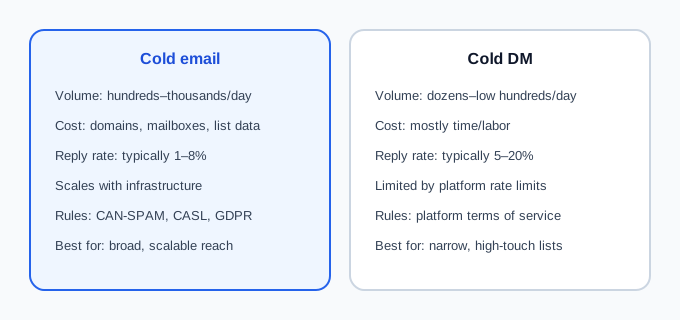
Cold email scales through infrastructure: more domains and mailboxes let you reach more people, at the cost of list, tool, and mailbox spend. Cold DM scales through time: platform rate limits typically cap sends at a much lower daily volume than email, so cost is concentrated in labor rather than infrastructure.
Reply rates tend to run the other direction — cold DMs on platforms like LinkedIn often see higher reply rates (5-20%) than cold email (1-8%), partly because of platform context and partly because volume is naturally lower and messages tend to be more targeted.
Comparing ROI, not just reply rate
A higher reply rate does not automatically mean better ROI. Run both channels through the same funnel math: emails/messages sent → replies → positive replies → meetings → clients → revenue, against each channel's real total cost (including labor, which is usually the dominant cost for DM outreach).
A cold DM campaign with a 15% reply rate but only 50 messages sent per day, run entirely by a $30/hour operator, can produce a very different cost per meeting than a cold email campaign sending 500/day across three mailboxes with a $200/month list budget. Model both before deciding.
Compliance and platform rules differ meaningfully
Cold email is governed by laws such as CAN-SPAM, CASL, and GDPR-adjacent rules depending on jurisdiction, plus your own opt-out obligations. Cold DM outreach is governed primarily by the platform's own terms of service, which can restrict automation, connection request volume, and messaging cadence — and can result in account restriction if violated, independent of any legal exposure.
Neither channel is inherently safer; they carry different rule sets that you're responsible for following.
Choosing between email and DM outreach
- Model both channels through the same funnel-to-revenue math before comparing.
- Include labor cost fully for DM outreach — it's usually the largest cost category.
- Check platform terms of service for DM automation and rate-limit rules.
- Confirm applicable email law compliance (CAN-SPAM, CASL, etc.) for email outreach.
- Consider running both at small scale before committing budget to either.
Frequently asked questions
Which channel is cheaper?
It depends on your labor cost and list access. Email scales cheaper per message at volume; DM often has a higher cost per message but a higher reply rate at low volume.
Can I combine both channels?
Yes — many teams use email for scale and DM for a smaller, high-priority target list. Model them separately since their cost structures differ.
Does the calculator support cold DM math?
The forecast model works for either channel — enter your DM-specific volume, reply rate, and labor cost in place of email-specific assumptions.
Related pages
Related guides
Put this into your own numbers
This article is educational planning content, not guaranteed results, legal advice, or compliance advice. Use the calculator to model your own assumptions.
Estimates are based on user-provided assumptions and are not guaranteed. See the disclaimer for details.